
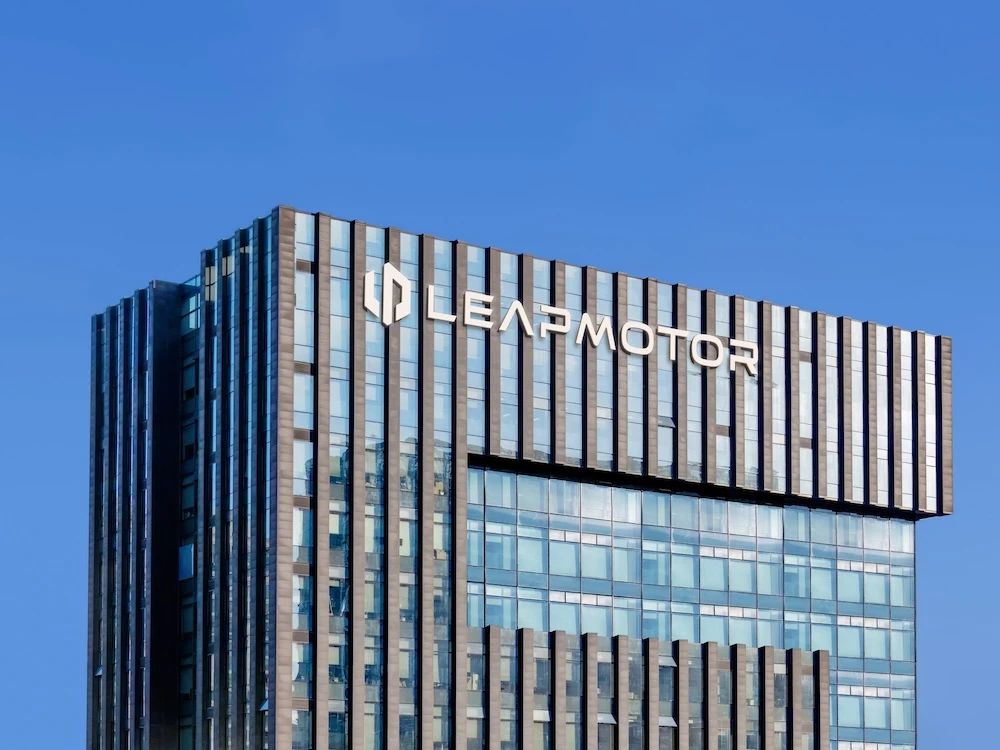
Leapmotor Supplies Battery Packs: Acting as CATL’s “Middleman” for Commercial EVs
Recently, Leapmotor’s self-developed battery packs have started supplying external customers. The cells are procured from CATL and other battery manufacturers, while the battery packs are produced by Leapmotor. This business is handled by LeapSonic Energy, a subsidiary focused on battery R&D.
The subsidiary has already received orders from over 5 commercial EV customers and continues to expand its client base. Xineng New Energy is one of the commercial vehicle manufacturers currently in deep negotiations with them.
For Leapmotor, battery packs are the most critical component of vehicles. Securing orders from multiple commercial vehicle manufacturers signifies that its component supply business has entered a new phase. For CATL, introducing Leapmotor as an “intermediary” may help CATL capture more market share in the commercial vehicle sector through more cost-effective solutions.
Why Leapmotor Targets Commercial Vehicles
Full-stack in-house R&D is one of Leapmotor’s core competitive strategies, especially in the “three-electric” systems (battery, electric motor, and electronic control). Years ago, Leapmotor began self-developing these technologies, spinning off subsidiaries like LeapDrive (focused on e-drive systems) and LeapSonic Energy.
In July, CEO Zhu Jiangming announced plans to expand in-house R&D beyond the three-electric systems, smart cabins, and ADAS to all high-value components where feasible. Leapmotor’s goal isn’t just cost reduction; it also aims to replicate BYD’s success path—selling both vehicles and components externally.
Stellantis is a key customer. Last year, Leapmotor and Stellantis established Leapmotor International, through which Leapmotor licenses its electronic architecture technology and supplies components like lights and e-drive systems to share R&D costs. In March, Leapmotor partnered with Hongqi (FAW) to co-develop a model for overseas markets, slated for production under the Hongqi brand in H2 2025.
Now, supplying self-developed battery packs to commercial vehicle makers—and hiring business developers to expand its client base—marks a turning point for Leapmotor’s component supply business.
Automakers’ self-developed components often struggle to gain traction among peer passenger vehicle (PV) brands:
- The new energy PV supply chain is already highly mature.
- Using rivals’ key components risks exposing future product plans, putting brands at a strategic disadvantage.
In contrast, the commercial vehicle (CV) market is easier to penetrate and offers strong growth potential:
- PV Market (H1 2024):
- Total retail sales: 10.901 million units
- NEV sales: 5.468 million units (+33.3% YoY)
- NEV penetration: >50% (growth expected to slow)
- CV Market (H1 2024):
- Total sales: 2.122 million units
- NEV sales: 402,000 units (+66.5% YoY)
- NEV penetration: <20% (significant growth anticipated)
Battery installation volume will rise alongside CV sales:
- 2024: 65.2 GWh (+116.4% YoY)
- H1 2024: 51.4 GWh (+126.2% YoY)
CV buyers are more cost-sensitive than PV consumers. As an automaker, Leapmotor offers systematic, low-cost engineering capabilities, making the “CATL cells + Leapmotor packs” combo a more cost-effective solution than CATL’s full battery packs—and thus more appealing to customers.
CATL Seeks New Allies to Defend Market Share
CATL, the battery industry leader, launched its “Sky-GO” series for CVs last year, targeting two pain points:
- Sky-GO L Supercharge Edition: Industry’s first 4C ultra-fast-charging light CV battery (140 kWh, 155 Wh/kg, 60% charge in 12 mins).
- Sky-GO L Long-Range Edition: 200 kWh, 200 Wh/kg, 500 km range (fully loaded at 80 km/h).
This year, CATL’s swap-focused subsidiary EVOGO released the 75# standard battery pack for heavy trucks. CATL stated it has co-developed over 30 chassis-swap models with partners like FAW Jiefang, Shaanxi Auto, and Dongfeng.
Despite CATL’s ability to sell full battery packs to CV clients, it chose to supply cells for Leapmotor’s packs. This CV alliance could deepen their cooperation in the PV segment.
For years, Leapmotor sourced batteries from mid-tier suppliers like CALB, Zenith Power, and Gotion High-tech. But in 2024, its B01 model (650 km range) began using CATL batteries.
- Leapmotor needs CATL’s brand prestige to elevate its image beyond “value-for-money” positioning.
- CATL needs partners like Leapmotor to consolidate its leadership.
H1 2024 data from the China Automotive Battery Innovation Alliance shows CATL’s market share fell >3 ppts YoY to 43.05%. With Xiaomi SU7 using BYD batteries as primary supplier and NIO’s Onvo L90 currently sourcing only from CALB, CATL must strengthen ties with rising EV brands to halt further share erosion.
Leapmotor is surging:
- H1 2024 deliveries: 221,700 units (+156% YoY)
- July deliveries: >50,000 units (+126% YoY)
- Estimated Q1 battery procurement: >¥2.5B (assuming batteries account for 30% of COGS)
XPeng is another fast-growing brand. In 2022, President Brian Gu announced plans to diversify battery suppliers, leading CATL to gradually exit XPeng’s supply chain. However, XPeng’s first two co-developed models with Volkswagen will use CATL batteries, potentially reopening the door.
After the July Leapmotor C11 launch, Zhu Jiangming voiced concerns:
“Our battle has only just been won—we barely turned a profit in Q4 last year. If Leapmotor can’t rapidly boost sales, profitability, and market share, it could be very dangerous.”
Going forward, battery pack external supply may become a critical business segment, synergizing with vehicle sales to enhance Leapmotor’s profitability.