
Harmony Intelligence’s Big Launch: 3 New Cars, 1M 2025 Sales Target
Harmony Intelligence Automotive Unveils 3 New Models, Targets 1 Million Annual Sales in 2025 with Aggressive Product Push
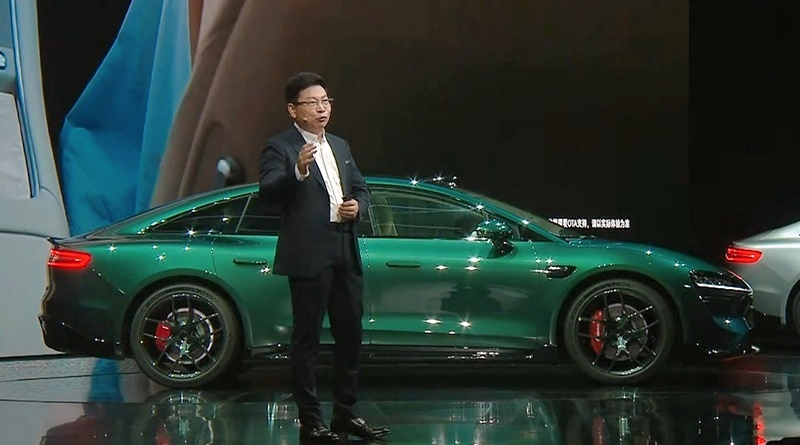
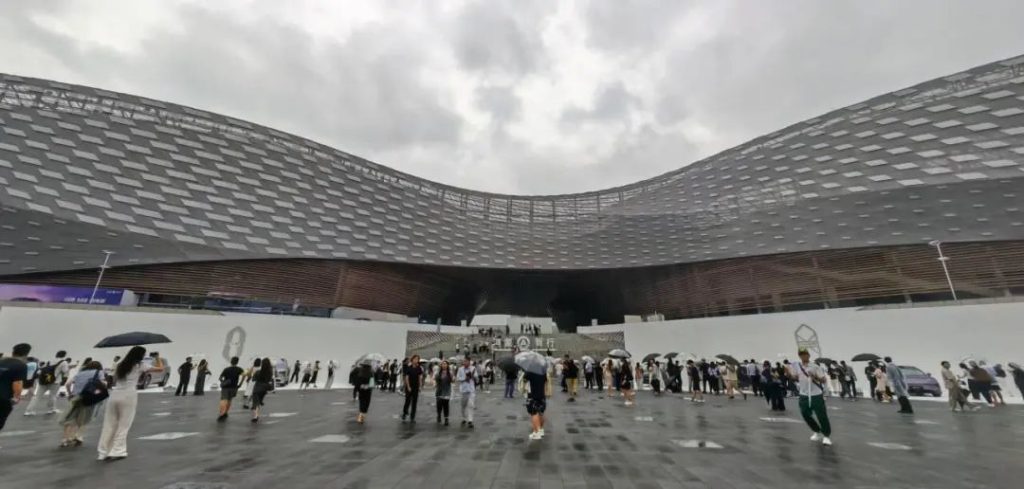
On August 25th, Harmony Intelligence Automotive held its Autumn New Product Launch Event in Chengdu, debuting three new models—the updated Luxeed R7, updated Luxeed S7, and AITO M8 Electric Version—while announcing dynamics for six additional models. This marked the largest product launch in the brand’s history, centered on the core strategy of “Luxeed & SAIC Compete on Pricing, AITO Competes on Performance.” The event also revealed a series of key data and technological breakthroughs, demonstrating Harmony Intelligence Automotive’s determination to hit its 2025 annual sales target of 1 million units.
I. Core Data & Market Performance
As of August 25th, Harmony Intelligence Automotive has achieved a cumulative delivery volume of over 900,000 units and ranked first among Chinese auto brands in terms of average transaction price for 14 consecutive months. The performance of specific models is as follows:
- MAEXTRO S800: Positioned in the ultra-luxury segment (900,000–1,000,000 RMB), it secured over 12,000 pre-orders within 87 days of launch. Its daily production capacity is set to increase from 60 units to 100 units soon.
- AITO M9: With 17 months on the market, it has accumulated 226,000 deliveries, maintaining a leading position in the high-end SUV market.
- AITO M8: Having been released for 4 months, it has delivered 70,000 units in total. The Electric Version of AITO M8 received over 7,000 pre-orders within just 2 hours of its launch, showcasing strong market appeal.
- Luxeed Dual “7” Models: The updated Luxeed R7 has already exceeded 52,000 preliminary orders, while the updated Luxeed S7 has opened for pre-sales. Both models are scheduled for delivery in September, which will further drive sales growth.
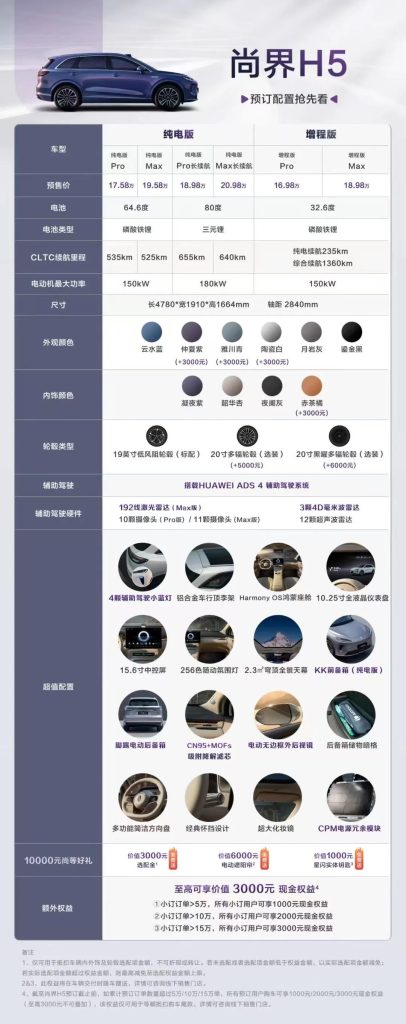
- SAIC H5: As Harmony Intelligence Automotive’s first model in the “150,000 RMB segment” with a starting pre-sale price of 169,800 RMB, it garnered over 25,000 preliminary orders within 1 hour of pre-sales opening, becoming a key player in breaking into the entry-level market.
II. Core Highlights of the Three New Models
(1) Updated Luxeed R7 & Luxeed S7: Technological Democratization & Pricing Benefits
As the first models of Luxeed’s 2.0 era, both vehicles feature the full deployment of Huawei’s cutting-edge technologies:
- Intelligent Driving: Equipped as standard with Huawei ADS 4.0, they come with a 192-line LiDAR, rear solid-state LiDAR, and distributed millimeter-wave radars. These systems support Urban NOA, Highway NOA, and Valet Parking, reducing hard braking rates by 30% and improving traffic efficiency by 20%.
- Interactive Innovation: A new “Window-through Intercom” function (to be launched in 2025) enables real-time communication between in-car passengers and pedestrians via 6 external microphones and 1 external speaker—no need to roll down windows. The Mic-less Karaoke 2.0 function uses AI to cancel original vocals in any song, breaking free from app restrictions.
- Range & Performance:
- Updated Luxeed R7: The all-electric version offers a maximum CLTC range of 802 km, while the extended-range version achieves a combined range of 1,673 km. It is powered by Chery’s 5th-generation 1.5T extended-range engine (with a thermal efficiency of 44.5%) and can replenish 200 km of range in just 5 minutes of charging.
- Updated Luxeed S7: The all-electric version boasts a maximum CLTC range of 855 km. The Ultra trim is equipped with an intelligent variable damping suspension and air suspension, enabling it to accelerate from 0 to 100 km/h in under 4 seconds.
- Pricing Strategy: The updated Luxeed R7 starts at 249,800 RMB, and the updated Luxeed S7 starts at 229,800 RMB. With the combination of Huawei’s high-end intelligent driving + 800V platform, these models undercut the pricing of comparable joint-venture vehicles.

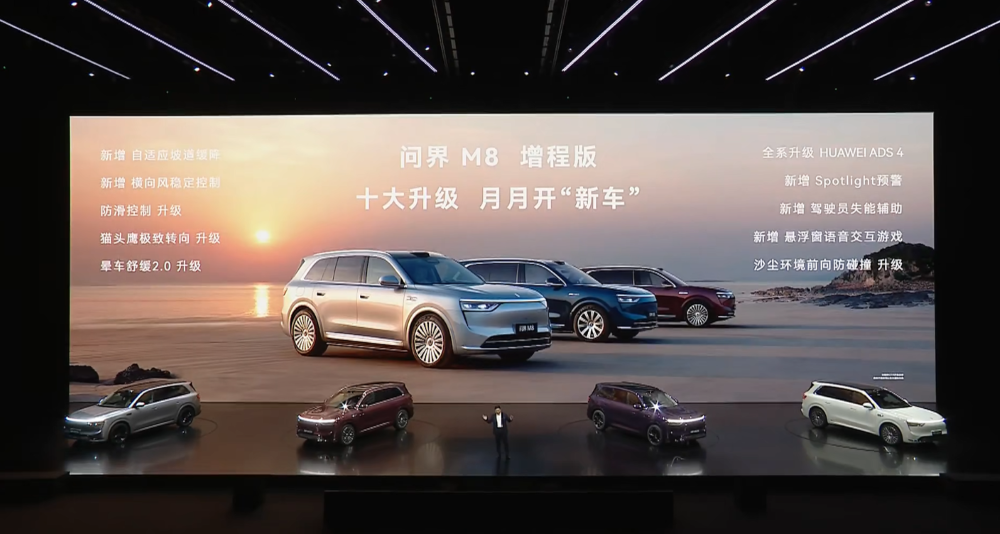
(2) AITO M8 Electric Version: Redefining High-End Electric SUVs
As Harmony Intelligence Automotive’s high-end flagship, the AITO M8 Electric Version focuses on extreme safety and performance:
- Three-Electric System: Equipped with a CATL 100kWh battery pack, it delivers a maximum CLTC range of 705 km. It supports fast charging from 30% to 80% in 15 minutes and can replenish 200 km of range in 5 minutes. Its 7-in-1 electric drive system achieves an efficiency of 92.25%, and the dual-motor 4WD version accelerates from 0 to 100 km/h in 4.3 seconds.
- Safety Performance: It has passed five extreme tests, including high-speed/low-speed sharp object scraping on the battery pack and deep water wading. The battery pack adopts a BMS 2.0 quadruple redundancy design, and the vehicle can achieve AEB braking at 90 km/h even in dusty weather.
- Luxury Configuration: Standard features include a dual-chamber air suspension, immersive heads-up display, zero-gravity seats, and Motion Sickness Alleviation System 2.0. The Ultra trim further adds million-pixel projection headlights, redefining luxury in its segment.
- Pricing Positioning: The 5-seat version starts at 359,800 RMB, and the 6-seat version starts at 379,800 RMB, directly competing with rivals like the Li Auto L9 and NIO ES8.
(3) SAIC H5: A Disruptor in the 150,000 RMB Segment
As the first cooperative model between Huawei and SAIC, the SAIC H5 aims to penetrate the mass market with segment-leading configurations and affordable pricing:
- Core Configurations: Equipped with Huawei ADS 4.0, a 192-line LiDAR, HarmonyOS cockpit, and a digital chassis engine. It features a body with 84% high-strength steel and supports L2+-level assisted driving in urban areas.
- Range Capability: The all-electric version offers a CLTC range of 655 km, while the extended-range version achieves a combined range of 1,300 km, meeting the long-distance travel needs of family users.
- Pre-Sale Strategy: Priced from 169,800 RMB to 209,800 RMB during the pre-sale period, customers can enjoy 10,000 RMB in benefits (including a 3,000 RMB customization fund and electric sunshades), directly competing with models like the BYD Song PLUS and Deepal S7.

III. Technological Breakthroughs & Ecosystem Layout
(1) ADS 4.0: Intelligent Driving on the Cusp of L3 Commercialization
Huawei’s Kunlun Intelligent Driving ADS 4.0 adopts the WEWA Architecture (Cloud World Engine + Onboard World Behavior Model), enabling:
- Scenario Coverage: Supports Point-to-Point (P2P 2.0) navigation, allowing automatic passage through highway toll ETC lanes. The Valet Parking VPD 2.0 function will cover 100,000 parking lots nationwide by June 2025, supporting cross-floor parking and valet charging.
- Safety Upgrades: The all-round collision avoidance system CAS 4.0 adds new features such as intelligent driving tire blowout stability control and driver incapacitation assistance. AEB coverage ranges from 1 to 150 km/h, and the system can brake to a stop for 30cm-high obstacles at 100 km/h at night.
- L3 Commercialization Preparation: The ADS 4.0 Ultra flagship version has completed 600 million km of cloud-based simulation testing and plans to pilot conditional L3 autonomous driving on highways in 2025.
(2) Charging Network & Brand Matrix
- Energy Supplementation System: Harmony Intelligence Automotive has partnered with over 1.4 million charging piles across 350 cities in China, with 800V ultra-fast charging piles accounting for more than 30%, addressing users’ range anxiety.
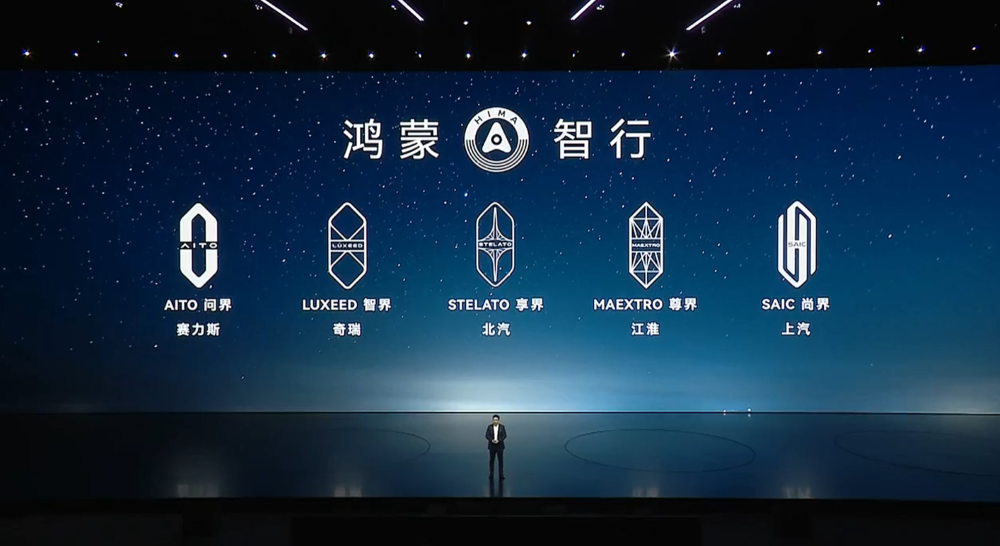
- Brand Layout: The Chengdu Auto Show will mark the first time all five brands—AITO, Luxeed, Xiangjie, MAEXTRO, and SAIC—are showcased together, covering the full price spectrum from 150,000 RMB to 1,000,000 RMB.
IV. Challenges & Future Outlook
Despite its rapid sales growth, Harmony Intelligence Automotive faces two core challenges:
- Balancing High-End Branding and Scale Expansion: The 200,000 RMB pricing of the updated Luxeed R7/S7 and the 150,000 RMB positioning of the SAIC H5 may dilute the brand’s high-end image, while the premium positioning of models like the AITO M8 Electric Version and MAEXTRO S800 needs further reinforcement.
- Supply Chain and Production Capacity Assurance: The low-price strategy of the updated Luxeed R7/S7 and SAIC H5 relies on cost-sharing with Chery and SAIC. Ensuring stable component supply and efficient production capacity ramp-up is critical to avoiding delivery delays that could harm market reputation.
Looking ahead, Harmony Intelligence Automotive plans to overcome these challenges through the following strategies:
- Strengthening Technological Barriers: Accelerate the large-scale deployment of ADS 4.0 and HarmonyOS Cockpit 5.0 to create a generational advantage over competitors.
- Upgrading User Experience: Launch exclusive service systems for the five brands, such as personal butler services for MAEXTRO and community-based operations for SAIC, to enhance user loyalty.
- Global Layout: Leverage Huawei’s overseas channels to gradually introduce Harmony Intelligence Automotive products to markets in Europe and Southeast Asia, transforming from a Chinese brand to a global smart mobility brand.
This launch event signifies Harmony Intelligence Automotive’s entry into a dual-track phase of “technological democratization + high-end breakthroughs.” Its ability to balance sales growth and brand enhancement will determine whether it can achieve the 1 million annual sales target in 2025 and solidify its position in the high-end segment of the smart electric vehicle market.