
Huawei ADS 4 Lands Big: World Model Gives Vehicles a “Predictive Brain”
Imagine Such a Daily Scene
You get into the driver’s seat, with your destination already synced to the cloud. The vehicle autonomously exits the underground parking lot and smoothly merges into the evening rush-hour traffic. When a cyclist suddenly darts out from the side of the road, the vehicle quickly adjusts its direction and gently taps the brakes, avoiding the danger half a second in advance. To delve into more details: the vehicle’s intelligent driving assistance system can predict risks on the road ahead based on continuous real-time dynamics, adjusting vehicle speed and chassis posture accordingly. All of this is no longer just a response by the intelligent driving model based on real-time perception, but rather a result of in-depth deduction of the physical world.
The core that endows intelligent driving with such “prediction and deduction” capabilities is the World Model. By fusing ultra-large-scale multimodal data—including millions of kilometers of real road conditions, simulated scenarios, and traffic rules—it constructs a dynamic, inferable digital traffic world. The vehicle no longer merely “sees” obstacles; it can even understand “why” they exist.
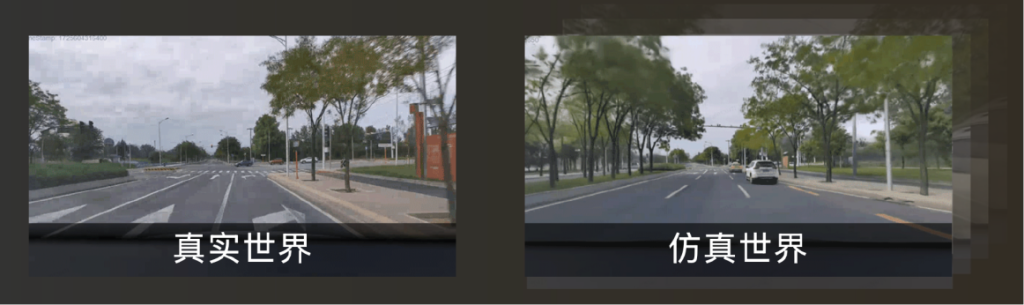
In simple terms, the World Model gives the vehicle a “brain for prediction” rather than just “eyes for reaction.” This capability is gradually becoming a reality. In April 2025, Huawei Kunpeng launched the newly upgraded ADS 4 system, marking a new phase in high-level assisted driving. Behind it lies Huawei Kunpeng’s self-developed WEWA Architecture (World Engine & World Behavior Architecture), which consists of the cloud-based World Engine (WE) and the on-vehicle World Behavior Model (WA). The WE is responsible for massive data training and scenario generation, while the WA enables real-time environmental reasoning and human-like decision-making on the vehicle side.
Huawei is not alone in this pursuit. By 2025, tech companies including XPeng and SenseTime have all identified the World Model as an indispensable path to achieving autonomous driving. In September 2025, Huawei Kunpeng’s ADS 4 system will be gradually installed in vehicles on a large scale. Behind this mass deployment, a new wave of World Model integration into production vehicles is expected to surge, and the core logic of intelligent driving is undergoing a fundamental shift: instead of merely learning human driving behaviors, the system is beginning to understand the physical laws themselves. The goal of autonomous driving is no longer just to learn “what humans do,” but to start thinking “how to do it better” to make driving safer.
After End-to-End Models: Intelligent Driving Seeks the “World Model”
From relying on computing power and rule-driven systems to introducing end-to-end models, intelligent driving technology has evolved, yet some fundamental challenges remain unsolved. In 2024, driven by Tesla’s technical route and with automakers concluding their “mapless city rollout” campaigns, the industry quickly shifted direction and collectively embraced “end-to-end” models. However, more and more players are realizing that traditional end-to-end models are not a perfect solution—they rely heavily on high-quality, large-scale real driving data for behavior “cloning,” essentially “imitating humans” rather than truly understanding the physical world or achieving cognitive breakthroughs.
For example, if 90% of drivers choose to brake and wait at a complex intersection while only 10% can pass smoothly, the intelligent driving system is more likely to learn “conservative stopping” rather than “precise decision-making.” It does not distinguish between right and wrong behaviors; it only imitates probability distributions. It does not pursue optimal solutions; it only fits normal patterns. When training such a model, it is difficult to expect it to naturally “learn” to become a top-tier driver. More likely, it will drive more like an “average driver”—hesitant, conservative, and even inheriting all the common flaws in human driving behaviors.
In the field of artificial intelligence, end-to-end models exhibit the characteristics of the typical Scaling Law: model performance improves with the increase in data volume, parameter scale, and computing power, and there is no sign of it peaking yet. The more data, the larger the model, and the stronger the computing power, the more human-like and smooth its driving performance becomes. However, the other side of the Scaling Law is that it cannot surpass the quality and distribution of the data itself. Researchers from institutions such as Harvard pointed out in a paper published last year that low-precision training will reduce the “effective parameter count” of the model.

Therefore, when facing the endless rare scenarios in the real world, end-to-end models still reveal the ceiling of their generalization capabilities. Against this backdrop, the industry is no longer debating “whether to switch to end-to-end models,” but exploring “how to achieve safer autonomous driving.” The World Model was born in this context.
At the beginning of 2025, automakers and intelligent driving suppliers are facing a choice regarding autonomous driving technology paths:
- Option A: Abandon modular design entirely and adopt a “one-stage” end-to-end model, or retain the perception-decision layer and planning-control layer modules to implement a “two-stage” end-to-end solution.
- Option B: Introduce Visual-Language Models (VLA/VLM) and attempt to reconstruct the entire driving interaction logic using multimodal large models.
- Option C: Incorporate the World Model to enable the system to understand, predict, and reason about the operating mechanisms of the physical world.
The World Model has come to the forefront fundamentally to address the bottleneck of end-to-end models—”only imitating, not thinking.” Its logic is not complicated: instead of merely relying on human driving data for “imitation,” it attempts to enable AI to truly understand the driving environment, predict future changes, and even independently generate reasonable behavior chains. This relies on the integration of deep learning and the Chain of Thought (CoT) reasoning framework. This architecture can independently generate continuous reasoning chains, gradually breaking through the limitations of long-term logical thinking, thereby significantly improving judgment capabilities in complex environments.
To this extent, the World Model not only solves the problems of scarce training data and uneven quality but also breaks through the ceiling of model capabilities. In the “great migration” of intelligent driving routes, the ranking of intelligent driving suppliers has also changed significantly, but Huawei Kunpeng remains in the first tier. According to research data released by ZuoSi Automotive Research, in 2024, Huawei Kunpeng ranked first with an absolute market share of 79.0% in China’s third-party pre-installed assisted driving domain controller full-stack hardware-software integrated solution market.
Why Huawei Kunpeng Continues to Lead
Huawei Kunpeng’s sustained leadership lies not in blindly following technical trends, but in taking a more fundamental path focused on spatial reasoning, centered on the essence of driving. In April 2025, among first-tier intelligent driving suppliers, Huawei Kunpeng took the lead in releasing the Kunpeng Intelligent Driving ADS 4 system based on the World Model, which will be gradually rolled out starting from September 2025.
What truly reflects Huawei Kunpeng’s differentiation is that it has always followed its own path while the industry 热议 (hotly discusses) the “end-to-end” and “VLA (Visual-Language Model)” paths. Take VLA as an example: this method attempts to introduce large language models into autonomous driving systems, converting visual signals into text descriptions first, then reasoning to generate driving actions. It has obvious advantages: it can more easily understand semantic information such as road signs and traffic rules, and it can readily reuse existing large model technologies. However, Huawei Kunpeng has identified its shortcomings: language models excel at text reasoning but lack precise perception of 3D space and motion deduction capabilities. After all, a vehicle is an object moving in the real space, and a tiny error may lead to risks.
“Huawei will not take the VLA path. We believe that although this path seems to be a shortcut, it is not the path to truly achieving autonomous driving. Huawei values WA (World Behavior Model) more—i.e., world action—omitting the language link in the middle,” said Jin Yuzhi, CEO of Huawei’s Intelligent Automotive Solution BU.
In a paper jointly released by Huawei and Zhejiang University in 2024, Huawei proposed Drive-OccWorld, a vision-centric World Model that can leverage the “memory” and “deduction” capabilities of the World Model—accumulating environmental knowledge and predicting future states—to improve the planning performance of autonomous driving systems and further enhance the safety and robustness of end-to-end planning.
Reshaping the Ceiling of Intelligent Driving with a More Systematic Model Design
Industry practices also indicate that the World Model has become a consensus. In 2023, Tesla already demonstrated the research progress of its World Model at CVPR 2023, but the R&D was still in its early stages, and Elon Musk advocated for the diffusion model. Previously, there was a view that the process of gradual refinement and prediction by the Diffusion model might be closer to the human cognitive and creative process, and thus more promising than some one-step generation methods.

In the Chinese market, NIO and XPeng are currently the main automakers practicing the World Model:
- In 2024, NIO launched NWM (NIO World Model), China’s first intelligent driving World Model. NIO’s World Model features multimodal autoregressive properties and can deduce 216 possible scenarios/trajectories within 100 milliseconds.
- XPeng relies on massive computing power and data training to drive high-level intelligent driving. Currently, XPeng has designed a path where cloud-based large models (i.e., World Foundation Models) and on-vehicle small models advance in parallel. The cloud-based large models are responsible for “reinforcement learning” and knowledge creation, while the on-vehicle small models convert knowledge into instant driving decisions. In XPeng’s cloud-based large models, the LLM (Large Language Model) serves as the backbone. Its VLA path requires converting visual and other information into language tokens for training, then generating control actions.
Compared with them, Huawei Kunpeng’s model architecture is unique; instead, it has chosen a more secure yet more systematic path that breaks away from language intermediaries. Its core innovation is the construction of a two-layer cognitive architecture consisting of “cloud-based World Engine (WE) + on-vehicle World Behavior Model (WA)”. The former is committed to efficiently generating and iterating extreme scenarios to achieve “AI training AI”; the latter fuses multimodal perception signals to realize real-time reasoning and human-like control—equipping the intelligent driving system with a “dual brain”.

1. Cloud-Based World Engine (WE): Creating “Real Difficult Problems” for AI
On the cloud, Huawei Kunpeng relies on self-developed generative models, focusing on the generation of the most scarce extreme scenarios in autonomous driving. The most fundamental and important aspect of generating scenarios for training lies in the authenticity of the scenarios. Although the industry generally adopts Diffusion Transformer or 3D Gaussian Splatting (3DGS), which can generate rich images and 3D scenarios, they still face the problem of “being visually appealing but not practically useful”—the key lies in whether the generated data conforms to physical laws and can accurately cover the weak links of the system.
Huawei Kunpeng’s differentiation lies in two aspects:
- Generating “difficult problems”: The self-developed generative model does not pursue general capabilities but focuses on Corner Cases (e.g., suddenly darting pedestrians, rolling obstacles in heavy rain) to collect high-value scenarios that are difficult to obtain through real-world data collection.
- Closed-loop authenticity: Through strict algorithm verification, it ensures that the lighting, materials, and motion of the synthesized scenarios conform to the physics of the real world, preventing defective simulated data from polluting the system’s cognition.
In simple terms, the essence of Huawei Kunpeng’s WE is to use AI to “pose difficult problems” for the intelligent driving system—and these are “real difficult problems”—thereby systematically forging a more robust and safer driving capability. To ensure safety, Huawei Kunpeng has also designed a set of Reward Function on the cloud to train the model’s ability to make safe, compliant, reliable, and human-value-aligned decisions and behaviors.
2. On-Vehicle World Behavior Model (WA): A “Dedicated Brain” for Driving
On the vehicle side, unlike the industry’s common approach of “transforming intelligent driving models with large language models,” Huawei Kunpeng’s World Behavior Model (WA) has chosen a more focused and efficient path: it is a behavior model trained from scratch specifically for intelligent driving.
Jin Yuzhi revealed that WA directly controls the vehicle through behavioral terminals, or more precisely, directly through information input such as vision (vision here is just a representative; the input may also come from sound or touch). The key lies in “specialization” rather than “reuse.” Although large language models excel at text reasoning, they lack intrinsic perception of space, distance, and speed. Entrusting driving decisions to them is like asking a linguist to learn to drive—they can read traffic rules, but they struggle to instantly judge braking distances or obstacle positions.
This means that Huawei Kunpeng’s WA model may not have the largest parameter scale, but it is definitely the one that “understands how to drive a car best”—it is built for safe driving, not for smooth conversations.

3. Competitive Advantage: Massive Real Vehicle Fleets and Autonomous Evolution Loops
Beyond the model architecture, Huawei Kunpeng has another more intuitive competitive advantage in the field of intelligent driving: its large-scale real vehicle fleet, which accelerates its large-scale deployment. Jin Yuzhi recently announced that the number of vehicles equipped with the Kunpeng Intelligent Driving system has exceeded 1 million, covering 11 automakers (including Dongfeng, Changan, GAC, BAIC, BYD, Seres, Chery, and JAC) and 28 vehicle models. Future new models to be launched will include the AITO New M7, Shangjie H5, and GAC Trumpchi Xiangwang S9. Currently, the speed of Huawei’s vehicle integration is still accelerating; Jin Yuzhi revealed that it now takes only 6 to 9 months for Huawei Kunpeng’s intelligent driving solution to be adapted to a new vehicle model at the fastest.
Every vehicle in this million-scale “intelligent fleet” feeds back complex scenarios in real time: data continuously flows to the cloud, and after being filtered, reconstructed, and enhanced by the World Engine (WE), it generates more effective training scenarios and iterates more reliable driving models. At the same time, the on-vehicle World Behavior Model (WA) simultaneously acts as a “real-time reasoning engine”—it receives the optimized model sent down from the cloud, fuses multimodal perception data locally, and then makes precise understanding and second-level decisions about the surrounding environment. The new model is then quickly deployed back to the vehicle side via OTA, promoting the overall evolution of the entire fleet.
Through this, Huawei Kunpeng has built an autonomous evolution loop of “perception → cloud-based training → on-vehicle evolution.” This capability loop also paves the way for Huawei Kunpeng to move toward higher-level autonomous driving. It not only supports the optimization of existing L2+ systems but also prepares for L3 and above autonomous driving.
Large-scale real data, specialized World Models, and a clear and consistent technical route together form Huawei Kunpeng’s most solid moat in the intelligent driving competition.