

Can V2X Technology Solve the Pain Points Revealed by Dongchedi’s Autonomous Driving Tests?
Introduction: The automotive industry was thoroughly shaken this week when Dongchedi conducted a “civilian examination” that exposed the true capabilities of current autonomous driving systems. This test could be described as “hell-level difficulty” — 15 kilometers of closed road sections with numerous high-difficulty real accident scenarios, traffic flow, obstacles, and emergencies. Nearly 40 of the most popular vehicle models on the market were put to the test.
The results caused an uproar. While Huawei-based vehicles performed well, they showed insufficient stability in extreme scenarios. Popular models like the Xiaomi SU7 exposed fundamental scene recognition defects. Tesla stood out like a lone rider, stable as a rock, as if saying: “You call this driver assistance? I call this autonomous driving.” Meanwhile, numerous domestic “top student” autonomous driving systems, which had been hyped to the skies in marketing, collectively demonstrated crash scenarios when faced with real situations — some couldn’t brake, others couldn’t navigate around obstacles, and some simply played dumb. Is this driver assistance or “assistance in delivering death”?
01Autonomous Driving Tests Expose Technical Shortcomings, V2X Becomes the “Game-Changer” for Perception Blind Spots
In Dongchedi’s tests, scenarios like “highway entrance encounters with aggressive lane cutting” and “fault vehicle identification in heavy rain at night” became litmus tests. This highlights the limitations of single-vehicle intelligence, which become particularly evident when compared to V2X technology.
Imagine if I were reborn and my vehicle was equipped with V2X technology — those so-called Dongchedi crash tests would become child’s play! Look at that “disappearing front vehicle” test — for my car, it’s nothing more than elementary stuff.
Imagine what would happen if cars could communicate like humans?
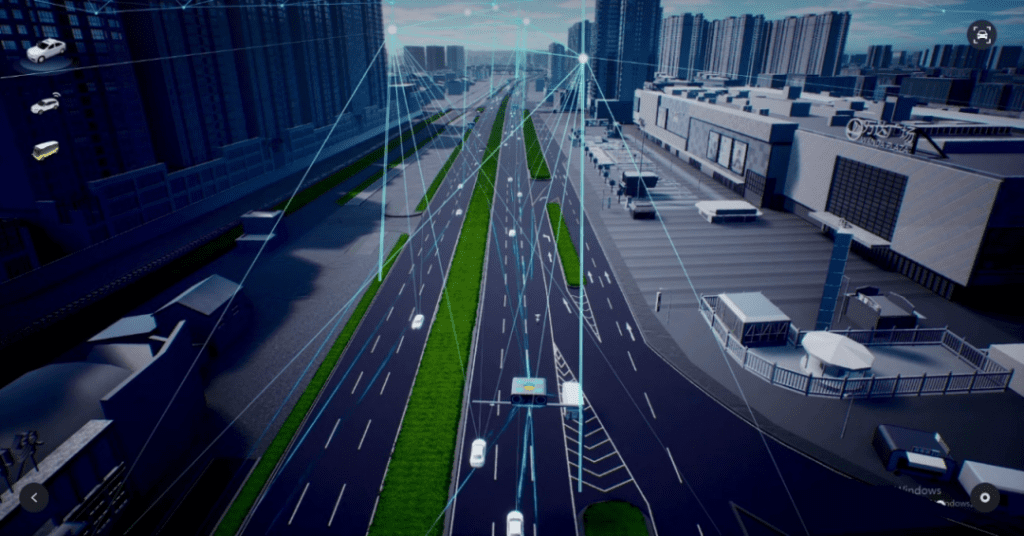
Your car can “see” dangers ahead (V2V): With V2V communication, surrounding vehicles become transparent, and their every move is under my control. Even if the front car suddenly plays a disappearing act, my car can provide early warnings like having a sixth sense and automatically brake. Why worry about rear-end collisions? This feeling is like equipping the car with clairvoyance and super hearing — traditional driver assistance systems seem incredibly weak in comparison!
Traffic lights actively “tell” you the optimal speed (V2I): This is like equipping vehicles with a real-time traffic intelligence officer. Traffic lights, construction zones, speed limit reminders — all this information can be known in advance, no more fear of suddenly appearing obstacles. As for that nighttime construction zone truck avoidance challenge in Dongchedi’s test, it’s a joke for me because my car already knows all the movements ahead.
When pedestrians cross the road, your car spots them before you do (V2P): It enables silent dialogue between me and pedestrians on the road, even when they themselves are unaware of danger. Children suddenly running across the road? For me, it’s just a light deceleration. Behind all this is powerful cloud data support and real-time road condition analysis.
Cloud real-time road condition updates (V2N): Heavy rain causing flooding ahead? Accidents causing congestion? The vehicle automatically plans new routes, avoiding time waste.
In today’s rapidly advancing technology, we should be doing better — however, the reality is that everyone is fretting over those outdated crash tests, while I’m already enjoying the future driving experience brought by V2X (Vehicle-to-Everything) technology. This overlooked and underestimated technology is like a superhero quietly rising from the darkness, ready to bring earth-shaking changes to the entire transportation industry.

However, don’t get too excited. For V2X to truly shine, several mountains still lie ahead:
- Compatibility issues between vehicle models create an invisible wall separating different brands;
- network security protection hangs like the Sword of Damocles, constantly threatening data safety;
- as for infrastructure construction, that requires massive investment of money and time.
- Low vehicle manufacturer participation makes “vehicle-road-cloud integration” exist in name only
02Vehicle-Road Coordination Reconstructs Testing Logic, Data Security and Standards Present New Challenges
The controversy over Dongchedi’s testing methodology precisely highlights V2X technology’s role in reconstructing autonomous driving evaluation systems. Traditional testing relies on standardized scenarios in closed venues, while V2X introduces dynamic roadside data (such as real-time traffic events and construction information), making testing closer to real road conditions.
Professor Wang from Tsinghua University points out that current systems achieve 90% coverage of known scenarios, but the remaining 10% of unknown scenarios need to be addressed through vehicle-road coordination.
For example, in Shanghai Pudong Jinqiao 5G-A test demonstration zone, roadside perception equipment can transmit high-definition video in real-time, helping vehicles predict beyond-line-of-sight risks.
However, large-scale V2X application still faces challenges including insufficient infrastructure and data security. Currently, only a few regions like Deqing and Shanghai in China have achieved large-scale C-V2X deployment, and communication protocols among different vehicle manufacturers are not yet fully unified.
In Dongchedi’s tests, three models from the same brand showed a 30% difference in pass rates due to sensor layout differences, reflecting the importance of system-level coordination. Additionally, while PKI-based message security systems can ensure information authenticity, how to balance data sharing with privacy protection remains an industry challenge.
03Policy-Driven and Ecosystem Integration: V2X Opens New Era of Autonomous Driving
At the policy level, China has incorporated C-V2X into new infrastructure construction. The Ministry of Industry and Information Technology has allocated the 5.9GHz dedicated frequency band for it and plans to achieve coverage in key areas by 2025. Pilot projects in Shanghai, Wuxi, and other locations show that V2X collaboration with 5G and high-precision maps can reduce highway chain collision risks by 67%, and dynamic bus lane sharing solutions improve road resource utilization by 15%.
This “smart vehicles + intelligent roads” model is reshaping the transportation ecosystem.
On the vehicle manufacturer side, BMW, Huawei, and others have accelerated deployment of vehicle-road-cloud integration. The BMW 5 Series launching in 2025 will feature V2X systems, achieving three major scenario functions including front vehicle emergency braking warnings; Huawei ADS 3.0 plans to integrate V2X, optimizing surrogate driving modes through cloud data.
Industry forecasts show the global V2X market will grow at a compound annual growth rate of 45.2% from 2022-2029, with market size expected to exceed $11 billion by 2029.
2025 becomes the explosive year for “vehicle-road-cloud integration” construction, with dual-track policy and infrastructure development
04Three Development Stages of Vehicle-Road Coordination Technology
Vehicle-road coordination technology uses advanced wireless communication and next-generation internet technologies to comprehensively implement dynamic real-time information exchange between vehicles, roads, and people. Based on full-time and full-space dynamic traffic information collection and fusion, it conducts vehicle active safety control and road coordination management, effectively realizing coordination between people, vehicles, and roads, ensuring traffic safety, improving traffic efficiency, and forming a safe, efficient, and environmentally friendly road traffic system.
The core essence of vehicle-road coordination is to weaken human factors and strengthen the coupling of people, vehicles, and roads, achieving optimized traffic flow control through information exchange and sharing.
From a technical architecture perspective, vehicle-road coordination has evolved from single communication to “cloud-edge-end” integration. Early architecture mainly focused on the communication layer, but with technological development, it has formed a complete system including vehicle-mounted terminals, roadside terminals, communication platforms, and cloud control platforms.
Vehicle-road coordination technology development can be divided into three key stages:
| echnology Stage | Core Functions | Technical Characteristics |
|---|---|---|
| Stage 1.0 | Information Exchange | Based on C-V2X R14/R15, enabling vehicle-road-vehicle basic communication |
| Stage 2.0 | Collaborative Perception | Multi-sensor fusion, edge computing, communication latency <100ms |
| Stage 3.0 | Collaborative Decision Control | 5G-V2X R16/R17, ultra-low latency (≤10ms), cloud-edge coordination |
Stage Information Exchange Coordination Collaborative Perception Collaborative Decision Control Timeline 2018-2020 2020-2025 (Current) 2025+ (Future) Main Functions Basic V2X communication, traffic information sharing Multi-sensor fusion, extended perception range Autonomous coordination, optimal traffic control Technology Maturity Commercially deployed Pilot applications R&D stage
Currently, China’s vehicle-road coordination technology has entered the 2.0 stage, namely the collaborative perception stage, mainly implementing enhanced perception capabilities through roadside sensor integration and real-time data sharing.
05Technical Architecture Comparison: National Standard Phase I vs Phase II
China’s vehicle-road coordination national standard system has evolved from basic communication protocols to roadside device coordination control, forming a technical architecture centered on “vehicle-road-cloud integration.”
Comparison Dimension National Standard Phase I (2018-2020) National Standard Phase II (2020-2025) Technical Focus C-V2X communication standards, basic information exchange Multi-sensor fusion, edge computing, cloud control integration Application Scenarios Information interaction (traffic sign push, emergency braking warning) Collaborative control (dynamic speed limits, tunnel coordination, regional optimization) Latency Requirements ≤100ms ≤10ms (edge computing nodes) Security Standards Basic data encryption, identity authentication Data classification, desensitization encryption, system-level security Infrastructure Requirements OBU/RSU hardware interface standardization Roadside multi-sensor fusion, cloud platform integration
Key Standard Examples:
Phase I: Centered on C-V2X communication standards (such as CSAE 53-2020), mainly solving the “information connectivity” problem of vehicle-road coordination, focusing on communication foundations.
Phase II: Represented by GB/T 44417—2024 “Technical Requirements and Test Methods for Intelligent Roadside Collaborative Control Equipment in Vehicle-Road Coordination Systems,” implemented from March 1, 2025, clearly defining requirements for entity relationships, equipment architecture, application service functions, basic functions, management functions, security functions, interface requirements, and equipment performance.
06Rational Cognition and Technical Evolution: Building a Safe and Efficient Future for Mobility
The core value of Dongchedi’s testing lies in helping consumers establish rational cognition of driver assistance. As Li Nan said, autonomous driving essentially deals with chaotic systems, and the uncertainty of testing can actually verify real capabilities. While V2X cannot completely replace human driving, its integration with single-vehicle intelligence is pushing the industry toward L3+ levels.
For example, on Hangzhou Bay Smart Highway, the vehicle-road coordination system achieved 30% improved traffic efficiency and 20% reduced carbon emissions through cloud scheduling.
Why hasn’t V2X become mainstream yet?
1. Insufficient Communication Network Stability
Vehicle-road coordination relies on high-reliability, low-latency communication networks. However, current 5G network coverage and signal stability in suburban, highway, and mountainous areas still have obvious shortcomings, making it difficult to support V2X’s high communication quality requirements.
2. High Infrastructure Construction Costs
According to research reports: Single intersection smart upgrade costs approximately ¥350,000; per-kilometer highway modification costs about ¥200,000; front-installed V2X T-box costs approximately ¥1,000/vehicle.
3. Unclear Business Models – The “Chicken and Egg” Dilemma
Vehicle manufacturers are reluctant to mass-install V2X modules because current V2X facility coverage is low; infrastructure investors hesitate because vehicles supporting V2X are limited.
4. Low Public Awareness, Unactivated Market Demand
Consumers focus more on “autonomous driving levels,” “range,” and “smart cockpits,” lacking awareness of “V2X support.”
5. Low Vehicle Manufacturer Participation
Despite “vehicle-road-cloud integration” being established as a national strategy, vehicle manufacturer participation remains generally low due to functionality limited to pilot areas, additional costs, and unclear data sharing mechanisms.
Ultimate Challenge: Technology vs. Interests – Who Compromises First?
Vehicle manufacturers vs. Government: Manufacturers want data control rights, government wants unified scheduling rights, creating a stalemate in negotiations.
Users vs. Costs: Users want “zero accidents” but are unwilling to pay extra roadside service fees.
Short-term vs. Long-term: Government pursues political achievements (results in 3 years), industry needs 10-year cultivation period.
Conclusion: A Silent Revolution
Dongchedi’s test serves as an industry “magic mirror,” both revealing the technical gaps in autonomous driving and pointing toward the breakthrough direction of vehicle-road coordination. The value of V2X technology lies not only in improving test pass rates but also in reconstructing the underlying logic of transportation systems — from relying on single-vehicle perception to vehicle-road-cloud integrated coordination.
With increased policy support and deepened ecosystem cooperation, V2X is moving from laboratories to real roads, sketching a safer and more efficient future for mobility. This represents not only a technological victory but also humanity’s continued exploration of transportation civilization.
China’s vehicle-road coordination technology has moved from “usable” toward “user-friendly,” but there’s still a gap before reaching “truly practical.” Despite policy enthusiasm, capital interest, and rapid technology development, challenges in implementation, profitability, and coordination remain the sharpest contradictions.
“V2X may not be as flashy as autonomous driving or as popular with capital as electric vehicles, but it might be the most critical underlying technology for future transportation. When you someday notice that cars on the road have suddenly become more ‘intelligent,’ with fewer and fewer accidents and traffic jams — that’s likely not the achievement of any single car manufacturer, but rather V2X’s ‘undercurrent’ finally surfacing.”
The road ahead is long and arduous. This revolution doesn’t need headlines, but it’s happening. It doesn’t need fanfare, but it’s destined to change the world.
07Epilogue: From Laboratory to Highway
Vehicle-road coordination is not a flashy technology show, but a silent yet profound transportation revolution. It will fundamentally improve traffic safety, optimize traffic efficiency, and assist autonomous driving implementation. Although it currently faces multiple challenges in communication, costs, and business models, with technological progress, policy guidance, and improved market mechanisms, vehicle-road coordination is moving from “pilot projects” to “universal benefits,” from “periphery” to “mainstream.”
Looking to the Future: With the deep integration of C-V2X with 5G-A and edge computing, vehicles will possess “X-ray vision” and “super brain” capabilities. Shanghai Lingang New Area plans to build China’s first regional-level 5G vehicle network, achieving large-scale autonomous vehicle operations through millisecond-level interaction between roadside units and vehicle terminals.
This technological evolution requires not only collaboration between vehicle manufacturers, telecommunications operators, and governments, but also the establishment of unified standard systems and business models. The ultimate goal is not just technological advancement, but the creation of a truly intelligent, safe, and efficient transportation ecosystem.
Key Success Factors for V2X Implementation:
Standardization: Unified communication protocols and data interfaces across different manufacturers and regions
Infrastructure Investment: Coordinated deployment of smart roadside equipment and 5G networks
Business Model Innovation: Clear revenue sharing mechanisms between stakeholders
Data Security: Robust cybersecurity frameworks protecting sensitive transportation data
Public Acceptance: Education and demonstration of V2X benefits to consumers
The path forward requires patience, persistence, and collaboration across the entire ecosystem. While the challenges are significant, the potential benefits — dramatically reduced traffic accidents, optimized traffic flow, and truly autonomous transportation — make V2X development not just a technological imperative, but a societal necessity.
“The future of transportation won’t be built by any single company or technology, but through the seamless integration of vehicles, infrastructure, and intelligence. V2X is the invisible thread that will weave this future together.”