

NEV Tech Revolution: Democratization and New Competition
2025 New Energy Vehicle Sales Forecast to Exceed 16.5 Million Units, Penetration Rate Surpasses 50%; Chinese Brands Dominate Half of Global Market
In this technological revolution, automakers’ R&D investments, ecosystem strategies, and globalization plans are becoming critical variables for future success.
By 2025, China’s new energy vehicle (NEV) market is poised to reach a turning point from “quantity-driven” to “quality-driven” growth, fueled by technological iteration, policy support, and consumption upgrades. Solid-state batteries enter mass production, AI deeply empowers the industry, and high-level autonomous driving penetration exceeds 60%, marking the industry’s entry into a “technology democratization” era. Yet beneath rapid progress, undercurrents swirl: controversies sparked by improper remarks from Chery and Geely executives reflect fierce competition and the urgency of ecosystem restructuring.
I. Technological Breakthroughs & Industrial Race
From “Three Electrics” to “Three Intelligences”:
Comprehensive Innovation from Solid-State Batteries to Full-Scene AI
In 2025, NEV technology showcases three defining features: deepened electrification, popularized intelligence, and integrated ecosystems.
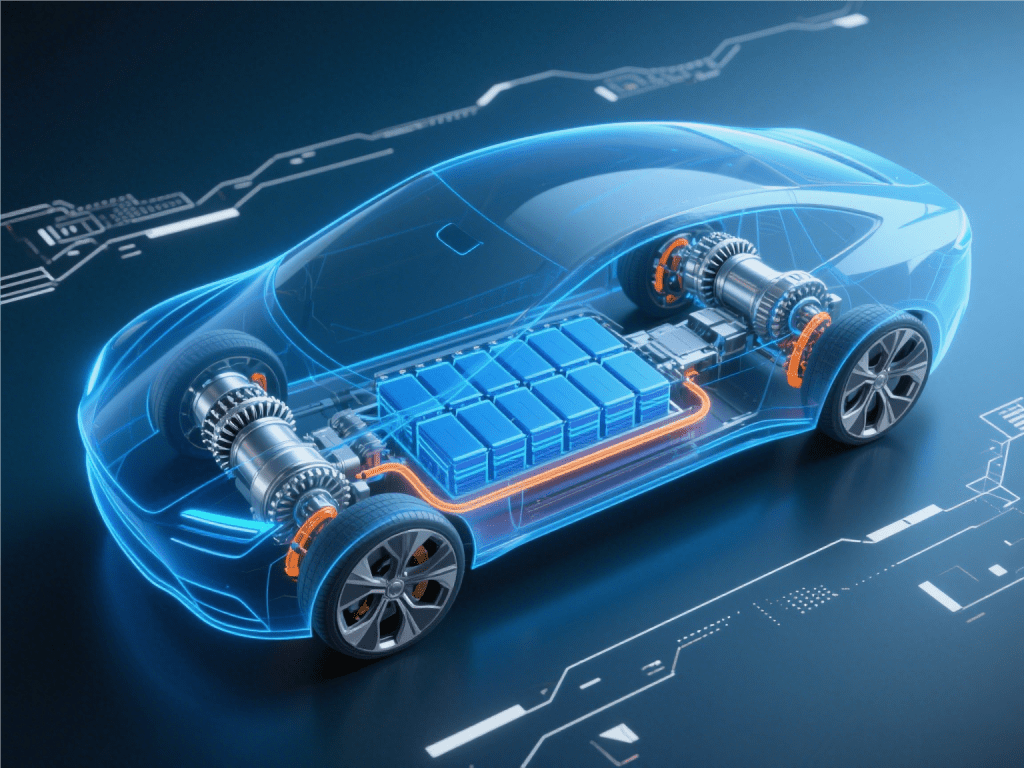
- Solid-State Batteries: Semi-solid-state batteries achieve mass production, with CATL and BYD models exceeding 800 km range; full solid-state batteries enter small-batch installation, boasting 40% higher energy density than traditional lithium batteries.
- Distributed Electric Drive: Xiaomi SU7 Ultra and Zeekr flagship models adopt quad-motor systems, enabling “tank turns” and extreme off-road capabilities, shifting from centralized to distributed drive architecture.
In Intelligentization:
- AI large models revolutionize R&D and user experience. Geely’s Xingrui Intelligent Computing Center 2.0 (23.5 EFLOPS) enables full-scene AI coverage from smart cabins to autonomous driving.
- Huawei ADS 3.0 boosts complex intersection efficiency by 30% via vehicle-road coordination.
- L3 autonomy penetration approaches 65%, city NOA (Navigate on Autopilot) covers 80% of China’s arterial roads, and smart cabin adoption exceeds 76%.
Competitive Landscape:
- Geely leads with its “Full-Scene AI” strategy, investing ¥15.9B in R&D (2024). Its “Qianli Haohan” autonomous driving suite offers H1–H9 tiers for cost-effective L2–L4 solutions, pushing high-end autonomy into the ¥150k ($21k) segment.
- Chery pursues dual-track ICE/PHEV strategy: Kunpeng Super Hybrid C-DM 5.0 achieves 48% thermal efficiency, driving 232% YoY plug-in hybrid sales. However, its intelligentization lags—highway NOA remains in development. The Huawei-collaborated Luxeed S7 (HarmonyOS 4.0) underperforms commercially.
- Global OEMs accelerate localization: Tesla’s Shanghai Gigafactory expands to 2M units/year, launching China-exclusive models; VW’s ID.7 upgrades MEB+ platform for local road conditions.
- Tech disruptors like Huawei and Xiaomi reshape interaction ecosystems via HarmonyOS Cabin and MIUI Auto.
Industrialization Bottlenecks:
- Solid-state batteries face high costs; full solid-state mass production delayed until 2027.
- Lidar prices drop to $200, but cost-cutting pushes camera-only solutions for sub-¥150k models.
- Data compliance and ethical risks of AI models challenge global expansion.
II. Technology Democratization & Consumption Revolution
From Range Anxiety to Scenario-Based Purchasing
2025 NEV market trends: price parity between EVs and ICE vehicles, tech democratization, and demand fragmentation.
- Range & Charging: 800V platforms enable 370 km range in 10 mins for premium models; LFP battery costs fall to ¥0.5/Wh ($0.07/Wh), allowing 500+ km range for ¥100k ($14k) cars, ending range anxiety.
- Intelligent Features: L2 ADAS and AR-HUD penetrate sub-¥200k ($28k) models. XPeng MONA M03 offers city NOA at ¥155,800; Wuling Bingo becomes a budget hit (333 km range, ¥59,800).
Shifting Purchase Logic:
- Decisions evolve from “spec-sheet comparisons” to “scenario alignment”:
- Families prefer PHEVs: Roewe D7 DMH delivers 1,400 km range + military-grade safety.
- Tech Enthusiasts prioritize autonomy: AITO M7 (HUAWEI ADS 2.0) enables mapless city navigation.
- Business Users seek luxury: Audi E5 Sportback redefines premium with 579 kW ultra-fast charging and localized autonomy.
New Business Models:
- NIO’s BaaS (Battery-as-a-Service) lowers entry barriers.
- Geely’s “subscription-based ADAS” offers pay-per-use features.
- NEV financial penetration exceeds 70%, making flexible ownership mainstream.
Challenges:
- “Spec overkill”: Redundant lidars/chips without optimized algorithms degrade user experience.
- “Fragmented capabilities”: Budget L2 systems show ≤70% success rates in lane-keeping/self-parking, eroding trust.
III. Global Competition & Future Outlook
From “China Solutions” to Global Standards
Divergent Global Paths:
- China prioritizes “vehicle-road-cloud integration”: Beijing/Wuhan legalize L3 autonomy; Baidu Apollo tests Robotaxi in 10 cities.
- U.S. focuses on single-vehicle intelligence: Tesla FSD V12 uses 1.6B-mile data for end-to-end decisions; Waymo expands Robotaxi via Google.
- Europe emphasizes safety/ethics: VW-BMW joint system complies with GDPR but lags in deployment.
Chinese OEMs Go Global:
- BYD builds Thailand/Mexico plants, exporting e-Platform 3.0 to Southeast Asia.
- Pony.ai partners with Uber for $28k/unit Robotaxis in the Middle East.
- Huawei licenses HarmonyOS to Mercedes-Benz, integrating “China standards” globally.
Post-2025 Competition:
- Battles shift from tech specs to “ecosystem synergy”:
- Tesla builds “vehicle-sharing + data subscription” loop; CyberCab (steering-wheel-free) redefines mobility.
- Chinese players leverage policy/cost advantages to export smart-transport solutions via Belt and Road.
- Solid-state/hydrogen energy may spark new revolution: CATL sodium-ion batteries power Wuling MINI EV; hydrogen trucks spread in port logistics.
Risks & Opportunities:
- Critical risks: >60% lithium import dependency; EU carbon tariffs; edge-case autonomy challenges.
- China’s advantage: Policy agility, complete supply chains, and rapid iteration position it to lead global NEV standards by 2030, transitioning from “follower” to “rule-maker”.
Conclusion
The 2025 NEV market is both a testing ground for technological revolution and a battleground for global industrial restructuring. Only by deeply integrating innovation with user needs can automakers navigate cycles and drive toward a sustainable future.