

CATL-Backed Skateboard Chassis Unicorn Nears $1.4B Valuation
Standing on the shoulders of CATL, Svolt Intelligence will empower automakers, mobility companies, and autonomous driving firms in an entirely new way.
While the industry focuses on CATL’s battery shipment volumes and energy storage curves, Svolt Intelligence—CATL’s skateboard chassis subsidiary—is quietly closing a financing round worth hundreds of millions of yuan.
According to informed sources, Svolt Intelligence’s first funding round is nearing completion. The lead investor is a renowned market-oriented investment institution, joined by new energy industrial capital and state-owned capital. Post-investment valuation is expected to exceed $1.4 billion.
Reinventing Vehicle Manufacturing with Skateboard Chassis
Since its establishment, Svolt Intelligence has maintained a low profile. Its most recent update was the July 14 announcement of a strategic cooperation agreement with T3 Mobility. Svolt Intelligence will provide dual empowerment through products and technology. Both parties will explore optimal lifecycle operation strategies for Robotaxis based on the Pangu chassis, pioneering a new paradigm for skateboard chassis-mobility service collaboration.
The Pangu chassis—Svolt Intelligence’s debut product—boasts “three high-performance features” as its core advantage: Ultra-Safety, Ultra-Efficiency, and Ultra-Intelligence.
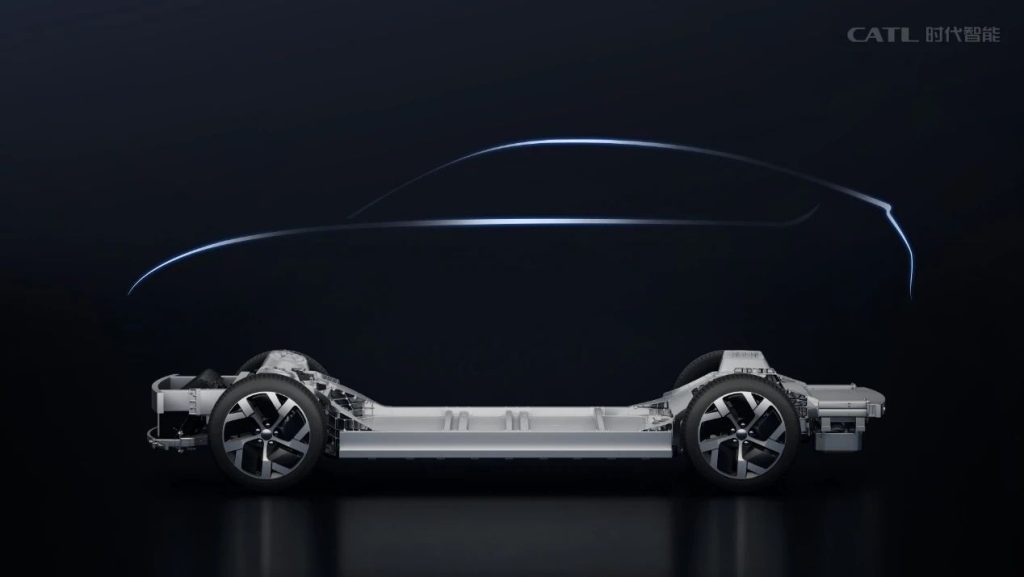
- With decoupled upper/lower body design, its energy absorption efficiency reaches 85%, far exceeding traditional chassis’ 60%.
- The flagship high-safety version adopts industry-first “bionic tortoise shell structure” and “aircraft carrier arresting gear” designs, reinforced by ultra-strength materials like 600MPa aerospace-grade aluminum and 2000MPa submarine-grade hot-formed steel.
- Integrated with CATL’s ultra-safe battery cells featuring NP2.0 zero-thermal-propagation technology, it passes extreme tests including 90° bending and penetration cutting.
- Optional axial-flux distributed e-drive system delivers up to 10,000Nm peak wheel torque and 500kW peak power.
- Standardized open software interfaces support pre-embedded L4 autonomous driving hardware.
Essentially, it transcends merely packing the “three electrics” into a baseplate. Instead, it pre-integrates battery safety, e-drive capabilities, and autonomous driving adaptability into a standardized platform. The chassis thus becomes the vehicle’s “public infrastructure.”
Svolt Intelligence’s first skateboard chassis model enters mass production in 2024, with follow-up models launching intensively during 2026-2027.
To date, Svolt has secured skateboard chassis partnerships with automakers and mobility platforms including BAIC, JAC, Avatr, Hello, T3, Baidu, Dongfeng Nissan, and Changan Mazda.
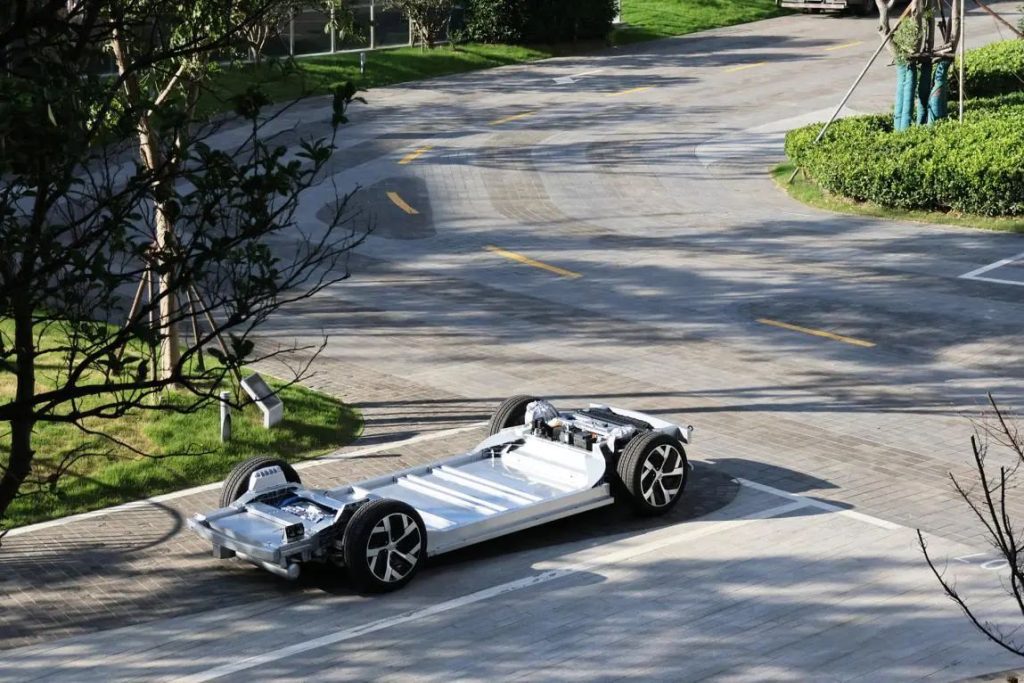
Based on recent business progress updates, this funding round may accelerate mass production of skateboard chassis models and support R&D for new scenarios like RoboX applications.
Since late last year, Level 4 autonomous driving commercialization has achieved substantive progress. The “RoboX scenario” could unlock greater potential for skateboard chassis—enabling unmanned logistics vehicles, robotaxis, and autonomous retail solutions.
Informed sources indicate overseas projects are advancing actively, with new milestones expected soon.
Why Skateboard Chassis?
What exactly is a skateboard chassis?
Simply put, it integrates batteries, e-drive systems, thermal management, and chassis controls into a single module. Offering a turnkey solution for mobility firms, EV startups, and even legacy automakers, it dramatically lowers vehicle development barriers.
Like a “wheeled iPhone motherboard”, it liberates exterior design creativity.
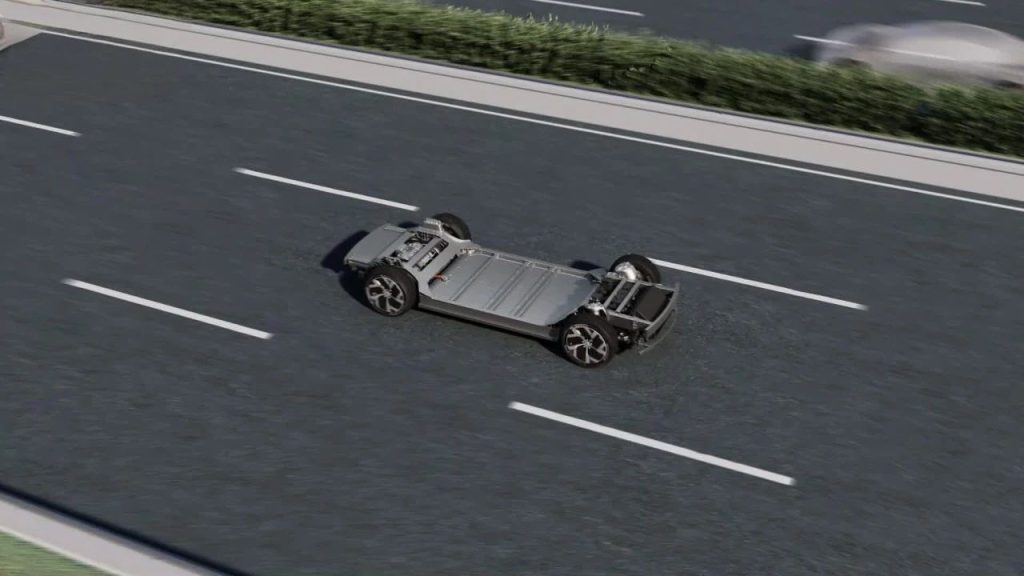
For CATL, this represents a natural evolution from “battery supplier” to “vehicle chassis system integrator.”
The skateboard chassis’ industrial value lies in slashing vehicle development thresholds and shortening R&D cycles. Leveraging CATL’s battery expertise, Svolt Intelligence further elevates chassis safety.
Svolt endows the Pangu chassis with three defining features:
- Decoupled Architecture: Automakers focus solely on upper-body design while platform providers handle underlying systems.
- Hyper-Integration: Compresses R&D cycles to 12-18 months (20%-25% cost reduction vs in-house development) with over 5% BOM savings.
- Open Interfaces: Standardized ports enable rapid autonomous driving deployment and LHD/RHD platform co-development.
For example, using the Pangu chassis, automakers can develop new vehicles in 18 months at one-third the cost of proprietary chassis development.
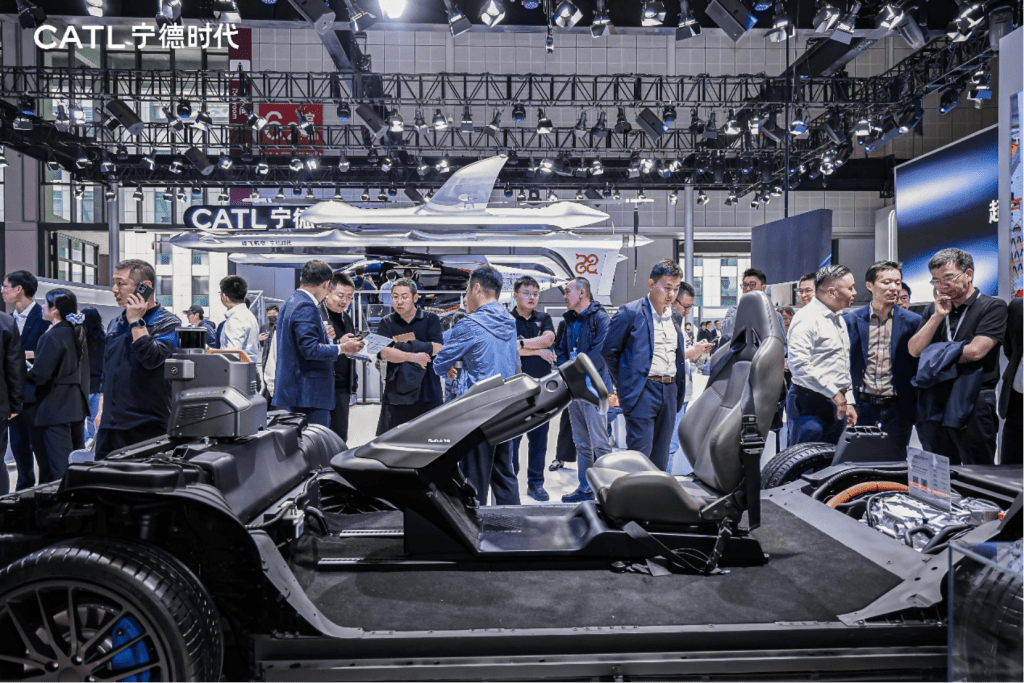
As autonomous driving enters the mainstream and L3-L4 solutions seek scaled deployment, skateboard chassis act as pre-built “assembly lines” for robotaxis, robobuses, and autonomous logistics vehicles. They serve as the automotive-grade carrier for autonomy and the first building block of future “smart vehicle factories.”
Industry reports predict a skateboard chassis mass-production wave in the light commercial vehicle market during 2025-2026. Svolt Intelligence is positioned at the starting line of this growth curve.
A familiar slogan resonates once more: “CATL doesn’t build vehicles—it’s deconstructing vehicle manufacturing itself, achieving something more profound than whole-car production.”
Standing on CATL’s shoulders, Svolt Intelligence will empower automakers, mobility firms, and autonomous driving companies in revolutionary ways.
This funding round is merely the first step in industrial transformation. Perhaps a new revolution—sparked by skateboard chassis—is about to unfold.