
China’s Intelligent Driving Firms March Overseas, Evolving from Product Sellers to Ecosystem Providers
This year’s IAA MOBILITY in Munich has emerged as a “global launchpad” for China’s intelligent driving supply chain.
Of the 748 exhibitors, 116 are Chinese enterprises—an increase of nearly 66% compared to the previous edition. According to incomplete statistics, no fewer than 10 of these are intelligent driving companies.
Gone are their days as “supporting roles” confined to a corner of the exhibition hall.

Today, they are stepping into the core of the global intelligent automotive industry chain, bringing with them chips, algorithms, domain controllers, sensors, and integrated vehicle solutions.
A Critical Shift: From “Single-Point Output” to “Systematic Ecosystem Deployment”
A more pivotal transformation lies in the evolution of Chinese intelligent driving firms’ global strategy—shifting from “single-point capability output” to “systematic ecosystem deployment.”
From selling algorithms to forging in-depth partnerships, from setting up representative offices to establishing regional headquarters, this generation of Chinese intelligent driving companies is now striving to expand their global footprint.
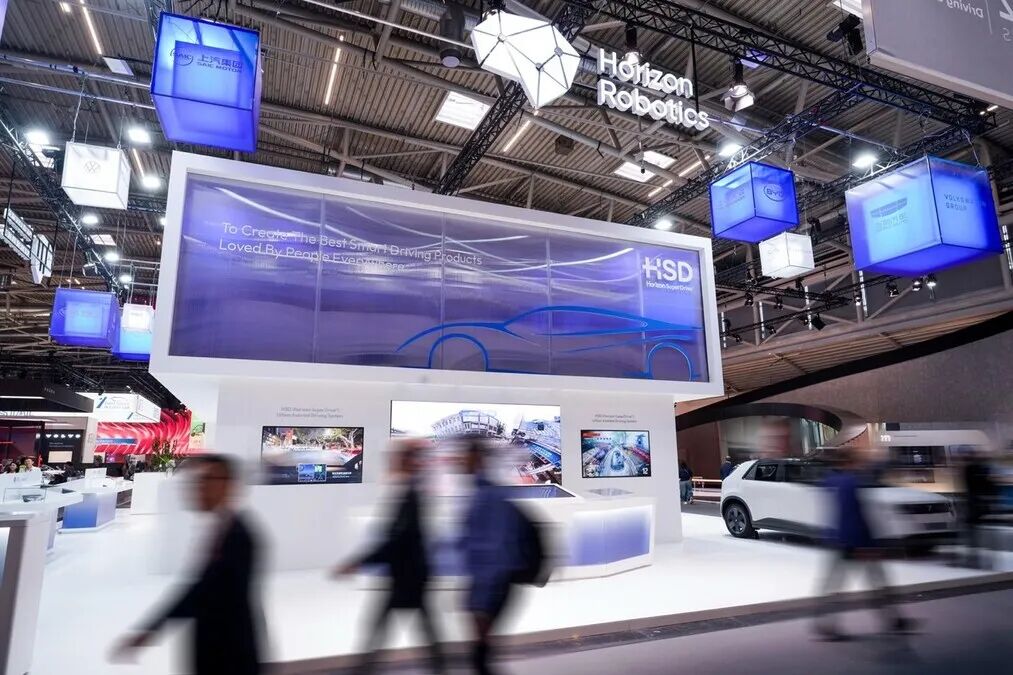
- Horizon Robotics unveiled an integrated intelligent driving platform for overseas markets, which has already entered the supplier selection process of several European automakers.
- DeepRoute.ai (文远知行) and Bosch jointly launched WePilot AiDrive, a one-stage end-to-end system, scheduled for mass production in 2025.
- QCraft (轻舟智航) announced a strategic partnership with Qualcomm and plans to establish its European headquarters in Germany.
Localization Becomes the New Standard
At this year’s IAA, many Chinese companies are no longer content with mere “product displays.” Instead, they are relocating their technical teams, product nodes, and organizational hubs to Europe.
QCraft officially launched its global strategy and will establish its European headquarters in Germany in Q4 2025, taking full responsibility for product R&D, safety certification, testing, and local operations. Simultaneously, QCraft and Qualcomm announced a strategic collaboration to develop next-generation intelligent driving systems for global OEMs based on the Snapdragon Ride™ platform, with mass production and delivery in markets such as Europe, the U.S., and Japan set to begin in 2026.

Horizon Robotics has also set up its European headquarters in Munich to support the localized needs of global clients, including chip adaptation, algorithm optimization, and system delivery. This marks a shift from the old model of “design in China, deliver overseas” to building a fully functional “operation base” in Europe—one capable of securing orders, delivering solutions, and forming closed-loop operations.
Beyond “setting up offices,” Chinese companies are also embedding themselves deeper into the main trunk of the global supply chain through partnerships:
- Momenta has joined forces with Uber, selecting Munich as the launch city for its L4 Robotaxi service, with official operations planned for 2026. Additionally, Momenta signed an agreement with Valeo to jointly develop mid-to-high-level ADAS systems for both Chinese and global markets.
- Horizon Robotics is collaborating with Bosch to develop the 4th-generation multi-function camera module based on its Journey 6B chip. Multiple projects with overseas automakers have been finalized, with deliveries expected to start in 2026.

Core Technologies Take Center Stage: Chips, Sensors, and Beyond
In the field of intelligent driving chips, Black Sesame Technologies (黑芝麻智能) showcased two core products:
- The Huashan-2 A1000 series chips for high-level intelligent driving systems, which have already entered mass production and are used in models such as Geely Galaxy E8, Lynk & Co 07, and Dongfeng eπ007.
- The C1296 chip—the industry’s first chip supporting multi-domain fusion computing—features AI computing and redundant safety capabilities for higher-level intelligent driving needs. The cockpit-driving integration solution built on the C1296 chip has secured contracts for multiple new Dongfeng models, with mass production planned for 2025.

In the sensor segment, Chinese enterprises are accelerating their leap from “single-product displays” to “system integration”:
- Hesai Technology (禾赛科技) presented two products at IAA: the ETX (the world’s first LiDAR with 800-line ultra-long ranging) and the FTX (a solid-state blind-spot filling radar), achieving independent control over the core architecture of high-performance LiDARs. Its ATX series, positioned as a “standard intelligent driving configuration for 100,000-yuan-class vehicles,” has been widely deployed in mainstream models by BYD, Chery, and Great Wall.
- RoboSense (速腾聚创) exhibited the EM4—the world’s first 1080-line LiDAR—and the E1, the first mass-produced solid-state LiDAR. Additionally, its RoboSense EM digital platform recently announced full-scale mass production and delivery, supporting customization of up to 2160 lines. Its flagship product, the EMX, features 192 real lines, a 20Hz high frame rate, and 300-meter ranging capability, and has become a core perception component in high-level intelligent driving solutions for multiple mainstream new energy vehicles.
LiDARs are no longer “supporting actors” but are being packaged and exported as an integral part of intelligent driving capability systems.
From establishing offices to setting up operational hubs, conducting tests, and partnering with Tier 1 suppliers and automakers, this wave of global expansion is not just about “taking solutions overseas”—it’s about “rooting capabilities locally.”
Chinese Solutions: Replicable Globally
The confidence of Chinese intelligent driving enterprises to evolve from “solution providers” to “ecosystem partners” stems from their system capabilities, honed through real-world scenarios.
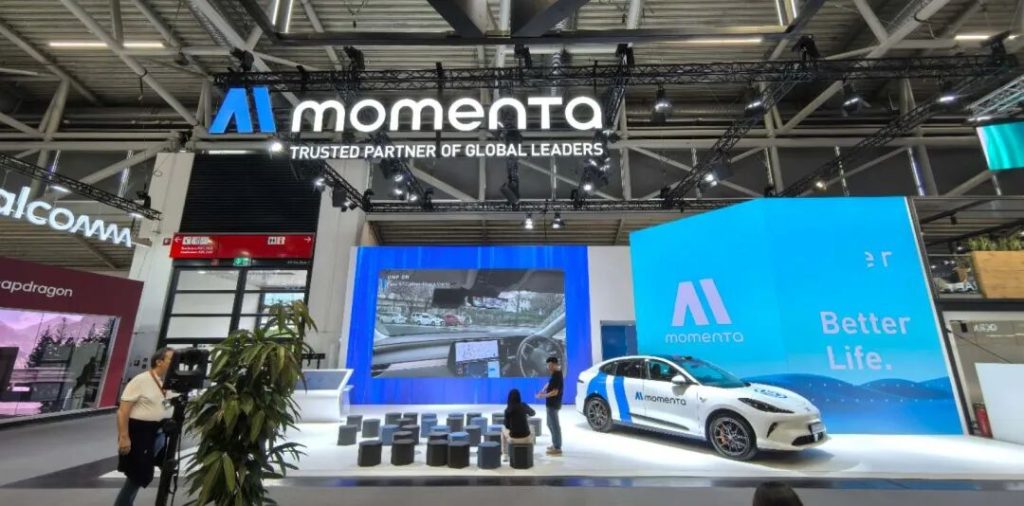
- Momenta has leveraged its “Flywheel Large Model” to build a complete system covering data collection, closed-loop training, and deployment verification. Fueled by “mass-produced vehicle data” and centered on “closed-loop automation,” this system enables integrated evolution from L2 to L4. Over the past two years, Momenta’s driver assistance systems have been installed in more than 400,000 vehicles. Its latest R6 model—the first reinforcement learning large model deployed in China’s mass production pipeline—proves its credibility through practical application.
- Horizon Robotics has advanced further in “hardware-software synergy.” Its one-stage end-to-end architecture integrates perception, prediction, and control systems, delivering shorter decision-making chains and higher inference efficiency. It maintains stable responses to complex urban scenarios such as “sudden pedestrian crossings,” “electric bikes running red lights,” and “reversible lanes,” earning it the industry nickname “China’s FSD”—a title well-deserved.
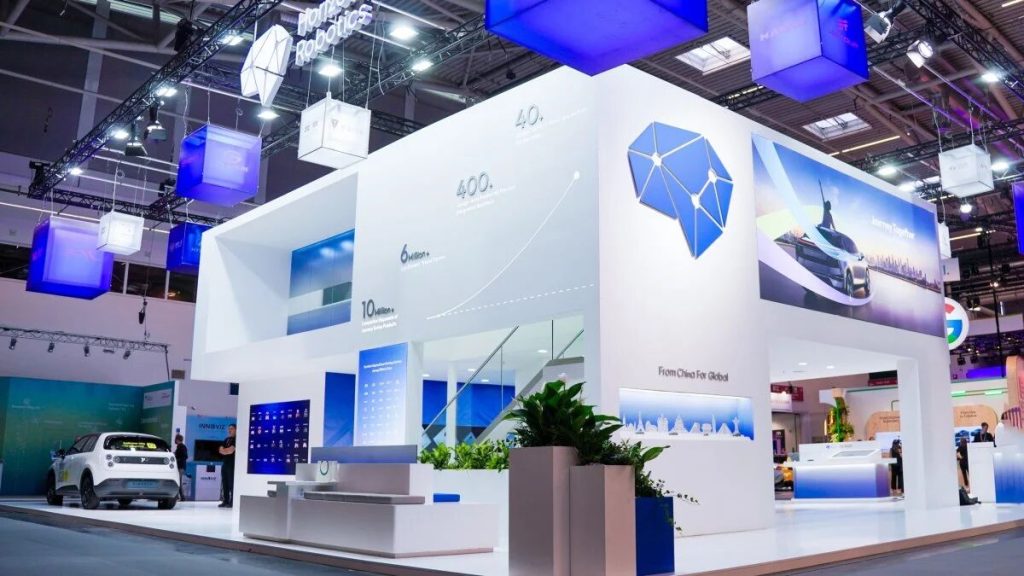
Horizon’s hardware keeps pace too: its Journey 6 series chips cover a computing power range of 10 to 560 TOPS, supporting everything from basic ADAS to high-level urban NOA (Navigation on Autopilot) across different vehicle platforms. To date, Horizon’s intelligent computing solutions have shipped over 10 million units, making it China’s first intelligent driving chip platform to reach the 10-million-unit mass production milestone.
These technologies are now being systematically packaged for global expansion, serving as a “booster” for Chinese automakers’ globalization:
- Horizon has provided overseas solutions to 7 automakers, including SAIC, BYD, and Chery, powering over 25 vehicle models across five regions (Asia, Europe, the Middle East, South America, and Australia). The accumulated mileage of overseas driver assistance tests has exceeded 1.5 million kilometers.
- Momenta, relying on its “Flywheel Large Model” system, has formed closed-loop partnerships with BMW, Toyota, and SAIC. While advancing mass production in China, it is also leveraging collaboration with BMW’s overseas projects to refine algorithm adaptation and data closed-loop capabilities, with targets set on the European and North American markets.
Other players are also making strides: DeepRoute.ai (元戎启行) showcased its DeepRoute IO 2.0 platform and the latest generation VLA model at IAA. Supporting both LiDAR and pure vision versions, the platform is compatible with SUVs, MPVs, off-road vehicles, and sedans, offering flexible adaptation for “multi-chip + multi-vehicle + multi-scenario” use cases. As of September 2025, DeepRoute.ai has secured fixed-point cooperation for over 10 vehicle models, delivered more than 100,000 mass-produced vehicles equipped with urban NOA driver assistance systems, and is advancing compliance and local deployment in markets such as Europe, Japan, and South Korea.
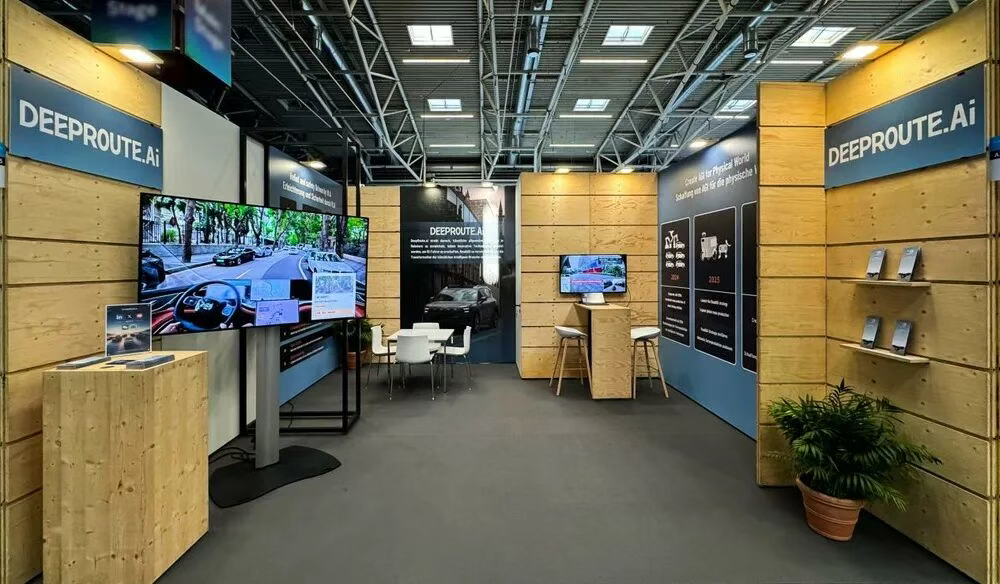
From algorithms, chips, and toolchains to platform integration capabilities, these intelligent driving companies are no longer just “component suppliers.” Instead, they have become “global expansion partners” deeply tied to automakers, sharing responsibility for project progress and delivery.
Their true core competitiveness lies in three key abilities: getting technology overseas, driving vehicle sales, and replicating ecosystems.
The Bar for Ecosystem Globalization Rises
While Chinese intelligent driving enterprises have collectively demonstrated their global capabilities at IAA, successfully integrating their systems into overseas markets is far more complex than simply exporting solutions.
The next phase of competition will not focus on concepts, but on engineering delivery capabilities, regulatory adaptation capabilities, and ecosystem deployment capabilities.
Take Europe as an example: high-level driver assistance systems must comply with both functional-level regulations (such as UNECE R157) and Euro NCAP testing standards—posing systemic challenges spanning perception, control, decision-making, and interaction. The “fast iteration” development logic once prevalent in China must give way to a more rigorous compliance verification model here.
Meanwhile, data privacy regulations like GDPR have set clear “red lines”: raw data cannot be transmitted across borders, and training processes must be conducted locally. This forces overseas enterprises to build local systems for data collection, desensitization, and model fine-tuning, ensuring “data does not cross borders, and capabilities are not compromised.”
A more practical constraint comes from the “precision calculation cycle” of the industry: automakers are no longer focused on “who has the most features,” but on “who offers affordable, replicable, and deliverable solutions.” Algorithms, chips, and platforms must be packaged into system solutions with high compression ratios, low power consumption, and strong engineering maturity to be included in procurement lists.

Future success will no longer be determined by “who can demonstrate the most dazzling driving performance,” but by “who can achieve positive ROI, meet regulatory requirements, and satisfy clients.” Three capabilities—closed-loop efficiency, cost accuracy, and rule-compliance competence—will become the foundational “passports” for the new round of global expansion.
Chinese enterprises are already taking steps to move closer to “rule-setting”: Horizon Robotics, DeepRoute.ai, Momenta, and DeepRoute.ai (元戎启行), among others, have participated in the discussion and promotion of international autonomous driving standards.
With the simultaneous advancement of product mass production, technological globalization, and ecosystem capabilities, Chinese solutions are gradually moving from the periphery to the mainstream—and their true influence is just beginning to take shape.